Culvert Crossing and Gravel Entrance Built for Real Access
Getting onto a property sounds simple until you're dealing with a roadside ditch that has no way to cross it. No culvert, no gravel, no real entry point - just soft ground that turns into a muddy mess when it rains. That's exactly the kind of problem that needs to be solved the right way, not patched over.
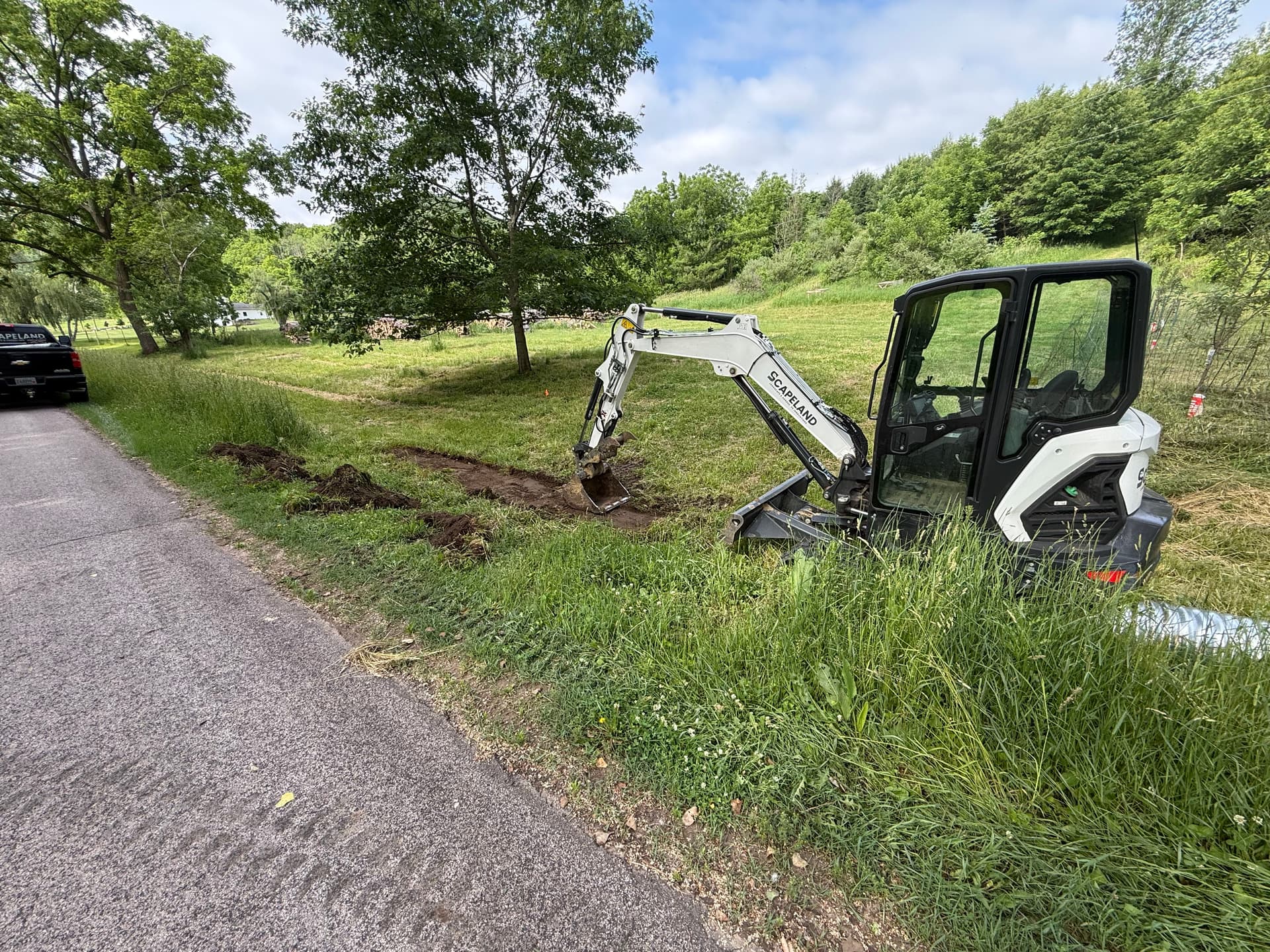
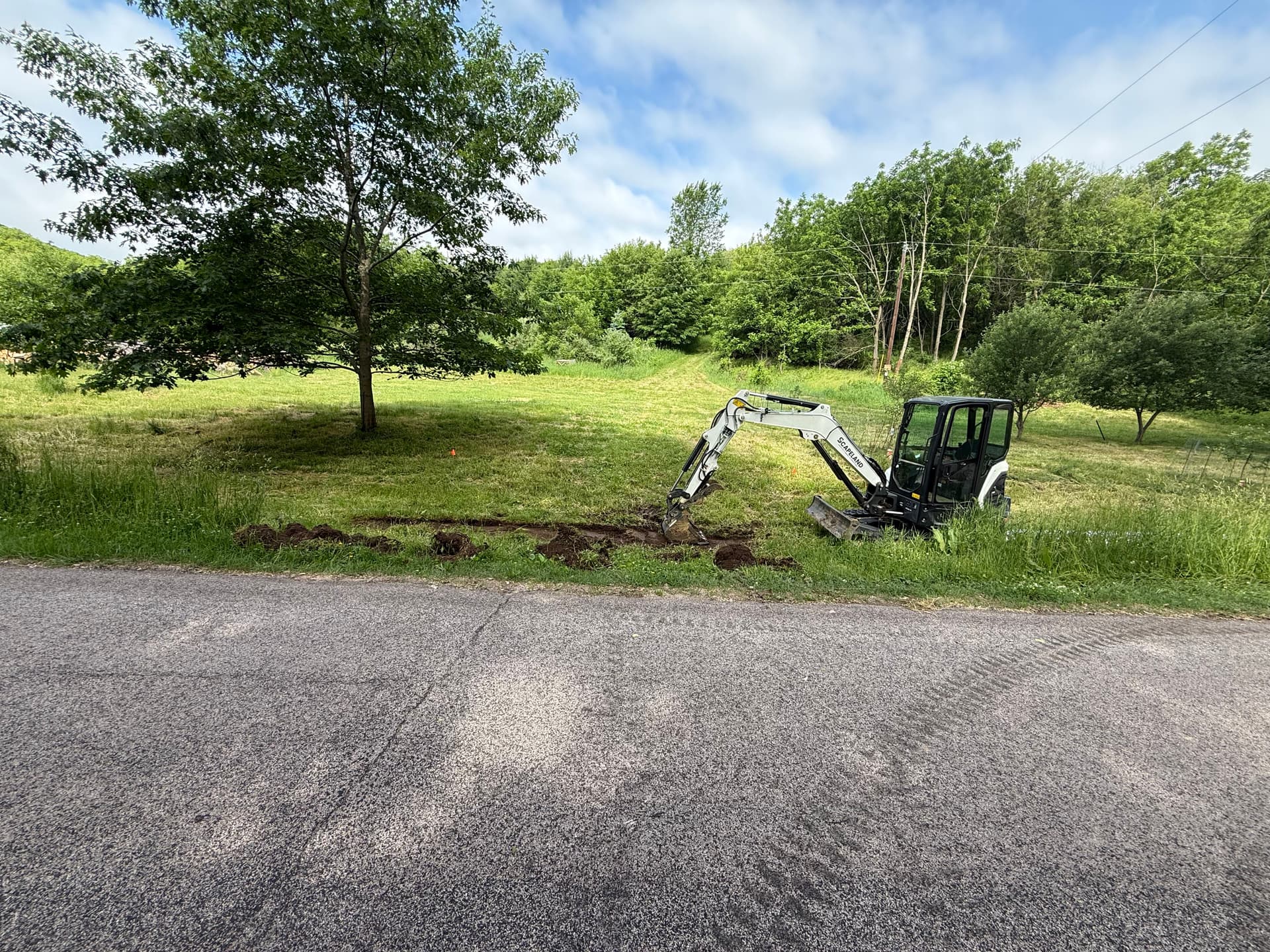
We started by trenching the ditch line along the road with our compact excavator to get the culvert set at the right depth and grade. That part matters more than most people realize. If the pipe isn't pitched correctly, water backs up instead of flowing through - and then you've got a bigger problem than when you started. Getting the grading right from the beginning is what separates a fix that lasts from one you're redoing in two years.
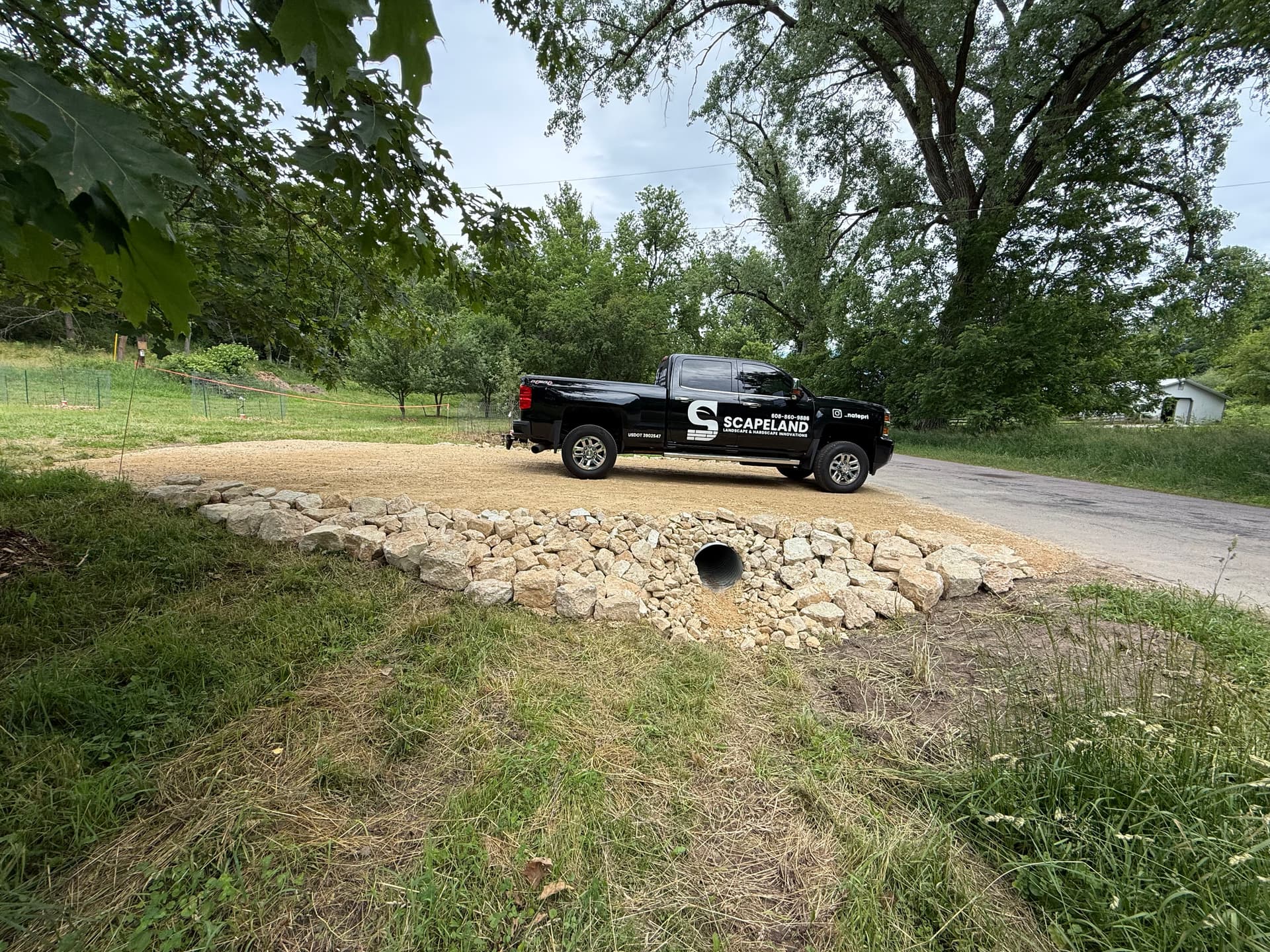
Once the culvert was in place, we built up the crossing with large fieldstone on both sides to hold the fill material and keep everything tight around the pipe. Then came the gravel - properly spread and graded to give the entrance a solid, stable surface you can drive on year-round without worrying about ruts or washouts.
The result is a clean, functional entrance that handles water the right way and holds up under regular use. No standing water pooling near the road. No soft spots waiting to swallow a truck tire in the spring. Just dependable access, built to handle whatever comes.
This is the kind of work that doesn't always look flashy, but it makes a real difference in how usable a property actually is. Whether it's a farm, a rural homesite, or a recreational property - if your access is unreliable, everything else is harder. Getting the drainage and grading right from the start solves that problem for good.